Evil eye jewellery: meaning, how to wear it and how to gift it

On this page
- What does the evil eye mean?
- Evil eye and nazar: the Indian tradition
- What do the evil eye colours mean?
- Which hand should you wear an evil eye bracelet on?
- Can you wear evil eye jewellery every day?
- How to choose: bracelets, bangles, necklaces, rings and earrings
- Evil eye jewellery as a gift
- How to stack evil eye bangles
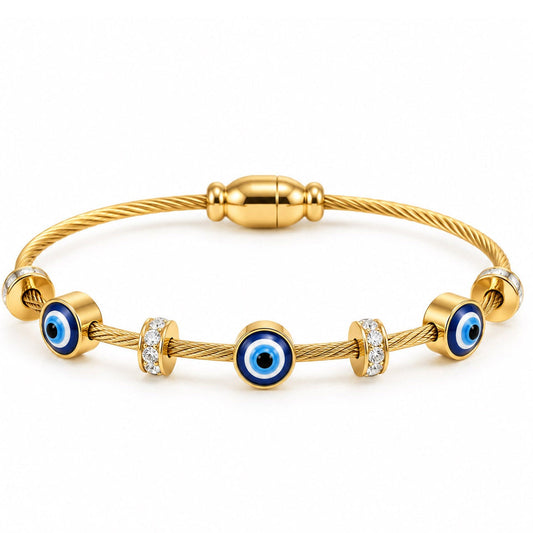
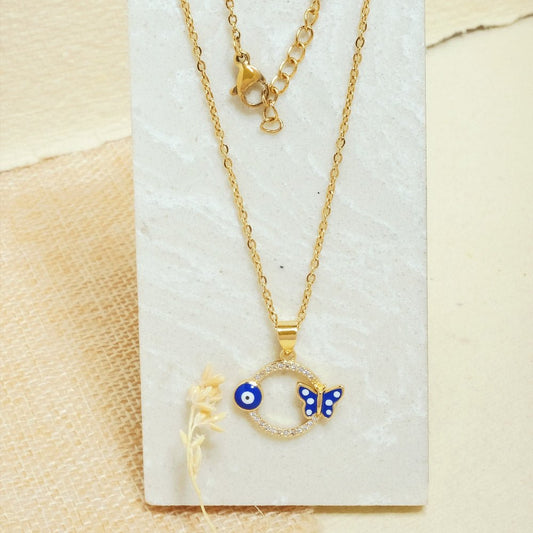
The evil eye, or nazar, is the belief that an envious or admiring look can bring harm. Evil eye jewellery carries an eye symbol that, by tradition, looks back at that gaze. People wear it as faith, as a family custom or as a symbol they love. Our gold-tone evil eye pieces are 316L stainless steel with 18K gold plating.
What does the evil eye mean?
The belief in the evil eye is thousands of years old and is found around the Mediterranean, across West Asia and North Africa, and in South Asia. The idea is simple: strong envy, or even too much praise, carried in a look, is believed to bring misfortune to the person or thing being admired. By tradition, the eye symbol answers that look: it is meant to meet the gaze and send it back.
Different cultures give it different forms. In Turkey the blue glass eye bead is called nazar boncuğu, and in Greece it is the mati. The hamsa, an open hand often drawn with an eye in the palm, is a symbol shared across West Asia and North Africa. In India, most of us simply call it nazar.
Wearing one is a personal choice. For some it is part of their faith, for some it is a custom passed down by a grandmother, and for many it is a quiet reminder to stay grounded and kind. Each of these is a good reason to wear one.
Evil eye and nazar: the Indian tradition
In many Indian homes, nazar lagna means being touched by someone's envious or admiring gaze, and nazar utarna means taking it off again. Customs differ from family to family and region to region, and you may have grown up with some of these:
- A small dot of kajal on a child's forehead or behind the ear, a little imperfection that, by custom, keeps admiring eyes from settling
- Lemon and green chillies strung together at the door of a home or a shop
- Salt or dried red chillies circled around someone, then thrown into the fire
- A black thread tied on the wrist or ankle
The blue eye charm comes from the Mediterranean and West Asia, and in India it now sits comfortably beside these older customs. A nazar bracelet on a black thread, a fine chain with a blue eye and a gold-tone evil eye bangle all carry the same wish: that the people we love are looked after.
What do the evil eye colours mean?
The colour meanings below come from popular tradition and modern jewellery lore rather than any single scripture, so treat them as a guide, not a rule.
| Colour | Often associated with |
|---|---|
| Dark blue | The classic nazar colour; calm and steadiness |
| Light blue | Peace and a clear mind |
| Black | Strength and grounding |
| Red | Courage and energy |
| White | Clarity and fresh starts |
| Green | Balance and growth |
| Pink | Friendship and affection |
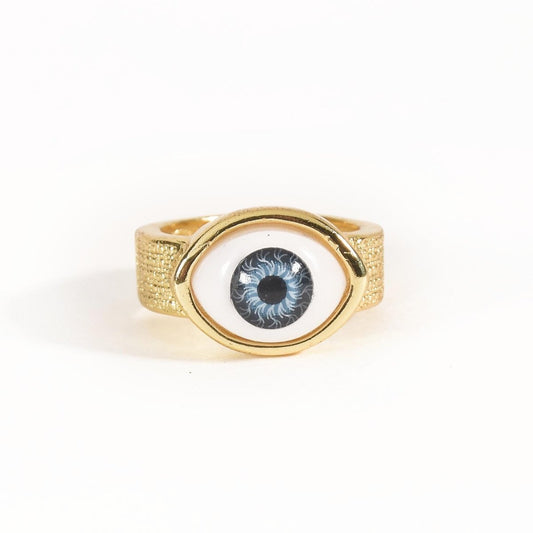
If you are unsure, dark blue is the traditional choice. Black suits anyone who prefers a quieter look, and white feels light and modern. The Mystic Evil Eye Ring (₹ 699) comes in white, black and blue, so you can choose the colour that feels like yours.
Which hand should you wear an evil eye bracelet on?
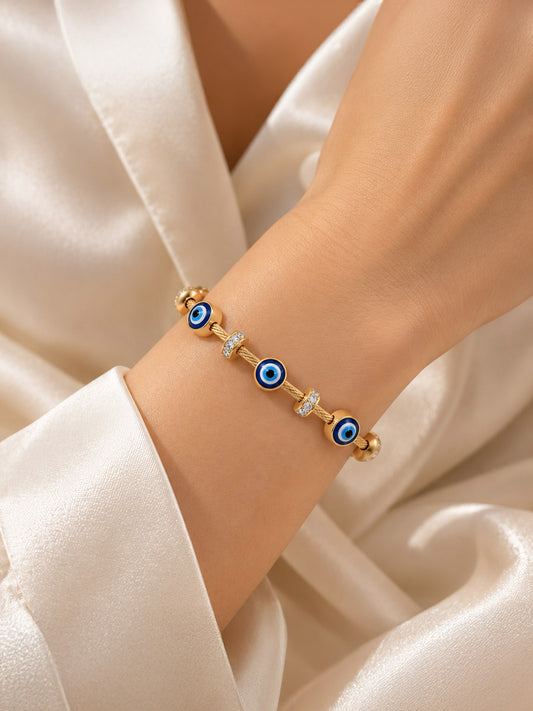
A common belief holds that the left side of the body is the receiving side, so many people wear an evil eye bracelet on the left wrist, where it is said to meet whatever comes towards them. Others wear it on the right, the hand they use most, so they see it through the day.
There is no single rule. Wear it where it feels right and where it sits comfortably with your watch. If your watch is on the left, an evil eye bangle on the right keeps the two from knocking together.
Can you wear evil eye jewellery every day?
Yes, with a little care. Our anti-tarnish evil eye pieces have a water-resistant design: rain and monsoon are fine, and they should come off for showers, baths and swimming. Put them on after perfume and lotion, wipe them with a soft, dry cloth after wearing, and store each piece separately so the eye details and stones do not get scratched.
How to choose: bracelets, bangles, necklaces, rings and earrings
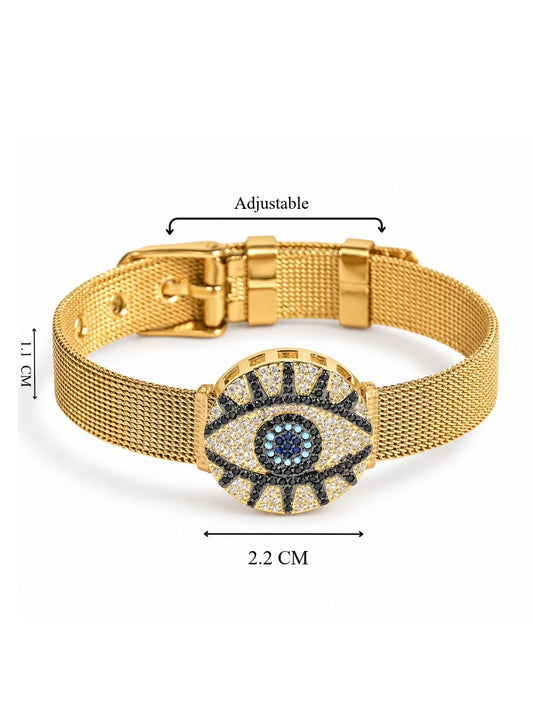
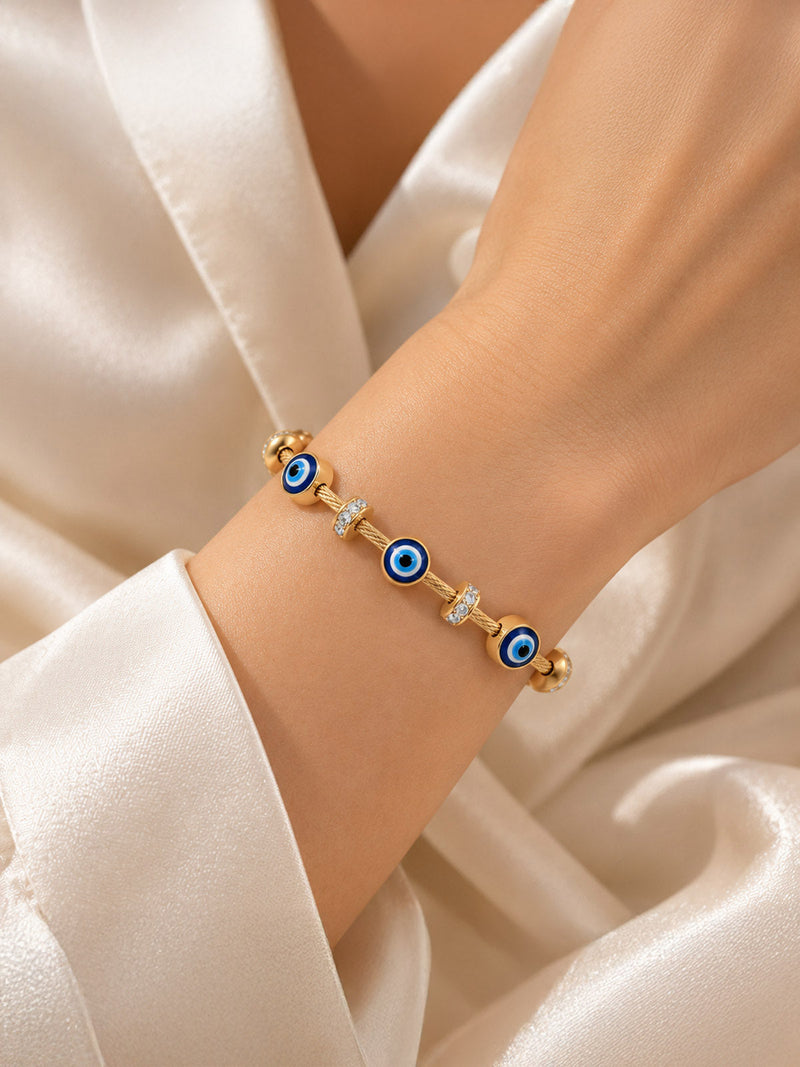
- Bracelets: a traditional way to wear the nazar. Our evil eye bracelets include thread, drawstring and chain styles. The Personalised Evil Eye Bangle With Your Initial (₹ 1,199) is an adjustable cuff with an evil eye charm and an initial of your choice.
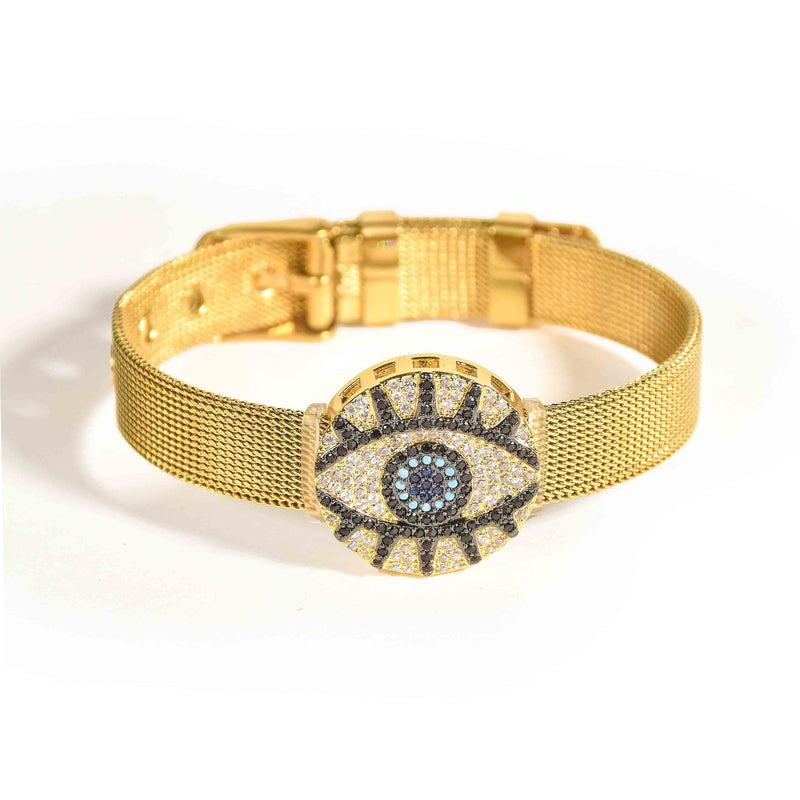
- Bangles: easy to stack and easy to wear. The Classic Evil Eye Bangle (₹ 1,000) is openable and comes in gold, rose gold and silver tones. See all evil eye bangles.
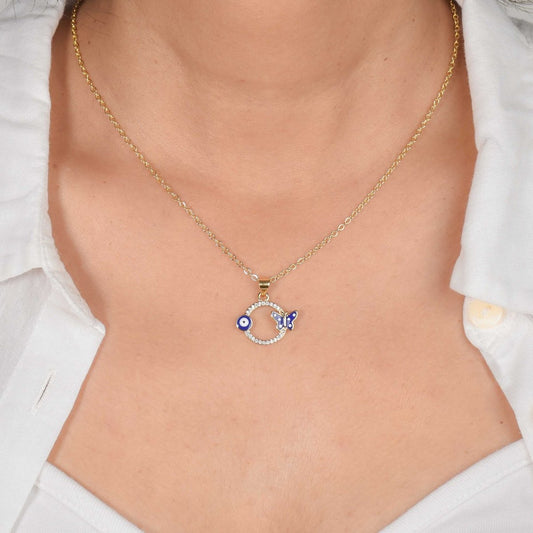
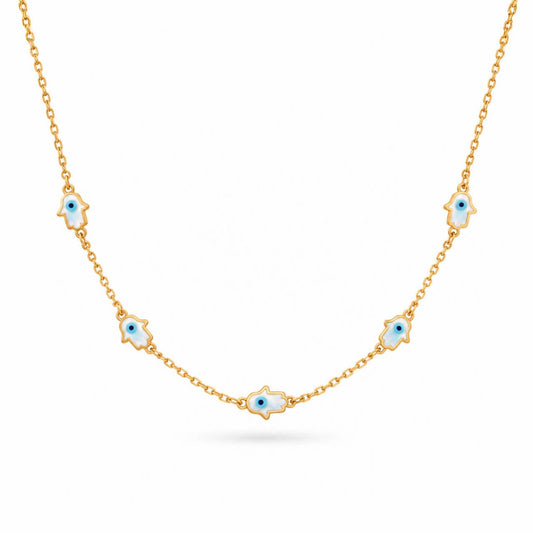
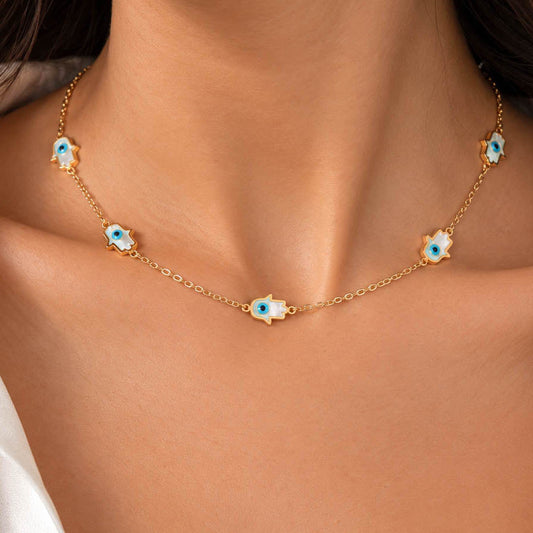
- Necklaces: a small eye at the collarbone is the quietest way to wear it. The Tiny Evil Eye Hamsa Necklace (₹ 1,249) pairs the eye with the hamsa hand and adjusts from 14 to 16 inches. There is more in evil eye necklaces and evil eye and hamsa.
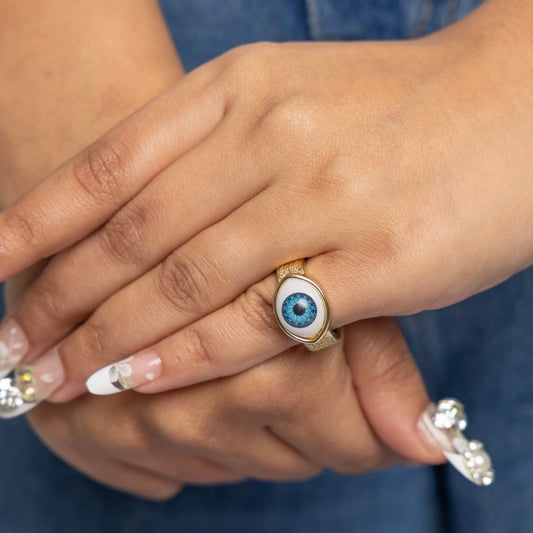
- Rings: a ring keeps the symbol in view all day. Browse evil eye rings, many of them adjustable.
- Earrings: small studs or danglers for a lighter touch, in evil eye earrings.
Everything is together in our evil eye jewellery collection.
Evil eye jewellery as a gift
In many families the nazar is something you give rather than buy for yourself, which makes it a thoughtful gift. It suits:
- A new beginning: a new job, a new home, a wedding or a first trip abroad
- Festivals and family days: Diwali, Bhai Dooj and birthdays
- A new mother, as a piece for herself
- A friend going through a hard time, as a small sign that you are thinking of her
A note on babies: our pieces are made for adults, and small jewellery can be a choking risk for babies and young children. Many families keep a baby's nazar to their own customs, such as the kajal dot, and give the new mother something to wear instead.
For the card, keep it simple: "For new beginnings, with love." "Something small to keep close." "So you always carry a little of home."
A gift box can be added for ₹ 150. It is a paid add-on and is not included with the jewellery.
How to stack evil eye bangles
Start with one evil eye bangle as the centre of the stack, then add one or two plain or studded bangles on either side. Keep to one tone for a clean look, or mix gold, rose gold and silver tones for more contrast. Wear your watch on the other wrist, and when the stack comes off, store the bangles apart so they do not scratch each other. For ready-made ideas, see our bangle stacks.
Questions about a piece, or about which one to gift? Write to hello@upakarna.com or WhatsApp +91 93723 36579.