Anti-tarnish jewellery: what it means and how to care for it
Priyal Yash ShahOn this page
- What does anti-tarnish mean?
- How Upakarna's anti-tarnish jewellery is made
- How long does anti-tarnish jewellery last?
- Is anti-tarnish jewellery safe for sensitive skin?
- Can you wear anti-tarnish jewellery in water?
- How to clean and store anti-tarnish jewellery
- 316L steel with 18K plating or 925 sterling silver?
- What to look for when you buy anti-tarnish jewellery
- Upakarna's anti-tarnish range by type
Anti-tarnish jewellery is made to resist tarnish, the dull, darker film that forms on some metals when they react with air, moisture and sweat. At Upakarna, gold-tone pieces are 316L stainless steel with 18K gold plating and have a water-resistant design, so they are made to be worn often, with a little care.
What does anti-tarnish mean?
Tarnish is a slow chemical change on the surface of a metal. Silver and copper react with sulphur compounds and moisture in the air, and the surface turns dull, yellowish or dark. Sweat, perfume and humidity speed it up, which is why a piece left in a damp cupboard can change colour without being worn at all.
Anti-tarnish describes jewellery built to resist that change. It is about the materials a piece is made from: the base metal and the finish are chosen so that the colour holds up to ordinary wear and simple care. If you searched for the anti-tarnish meaning, that is the short answer.
You will also see the words tarnish-free and tarnish-resistant. They describe the same idea, so read the material line of a listing to see what a piece is actually made of.
It is not a promise that a piece can never change. Anything you wear rubs against skin, clothes and other jewellery. What anti-tarnish jewellery gives you is a base metal that resists tarnish and a finish that keeps looking good when you follow a few easy habits, which this guide covers.
How Upakarna's anti-tarnish jewellery is made
Our gold-tone, rose gold and silver-tone anti-tarnish pieces start with a base of 316L stainless steel. 316L is a low-carbon grade of stainless steel chosen for how well it resists corrosion, and it is the same grade many watchmakers use for cases and bracelets. On top of the base, the finish depends on the colour you choose:
- Gold tone: 316L stainless steel with 18K gold plating
- Rose gold: 316L stainless steel with 18K rose gold plating
- Silver tone: 316L stainless steel
18K describes the gold used in the plating: 18 parts gold in 24, or 75 per cent. Plating is a thin layer, so the steel underneath gives a piece its strength and shape, and the plating gives it its colour.
These pieces have a water-resistant design and are lab-tested and skin-safe. A few styles, such as thread bracelets, are made from other materials, and our silver line is a different material again, 925 sterling silver, which has its own section further down.
How long does anti-tarnish jewellery last?
There is no honest single number. How long a piece keeps its colour depends on how often you wear it, your skin, the weather where you live and the habits around it. Two people can buy the same bangle and see different results.
The steel base resists tarnish. The part that changes is the plated surface, which wears gradually where it rubs and where it meets chemicals. These are the things that wear it fastest:
- Perfume, body spray, hand sanitiser, hair spray and lotion on the metal
- Long soaks: showers, baths and swimming, including chlorine in pools and salt in the sea
- Friction: a bangle knocking against a desk or laptop all day, or a ring worn while cleaning or lifting weights
- Storage: pieces kept loose in one box, scratching each other, or left in a damp bathroom
And these help a piece keep its colour: put jewellery on after perfume and lotion, take it off for showers, baths and swimming, wipe it after wearing and store each piece on its own. These small habits matter more than anything else.
Is anti-tarnish jewellery safe for sensitive skin?
Our anti-tarnish pieces are lab-tested and skin-safe. Nickel is the most common cause of metal allergy from jewellery, which is why we had our pieces tested.
Skin is personal, though. If you have a diagnosed metal allergy, check with your doctor before wearing any new jewellery, and take a piece off if your skin feels itchy or looks red. Keep pieces clean and dry too: sweat and soap trapped under a ring or bangle can bother skin on their own.
Can you wear anti-tarnish jewellery in water?
Our pieces have a water-resistant design. In everyday terms:
- Rain and monsoon: fine. Pat the piece dry when you get in, before you put it away.
- Showers, baths and swimming: take pieces off. Soap, shampoo, hot water, chlorine and salt water are hard on any plated finish.
- Workouts: if you keep a piece on while you exercise, wipe off the sweat afterwards with a soft, dry cloth.
A simple rule: if you are getting into water on purpose, the jewellery comes off first.
How to clean and store anti-tarnish jewellery
- After wearing, wipe each piece with a soft, dry cloth to lift sweat, oil and make-up.
- For marks that stay, use a cloth lightly dampened with plain water, then dry the piece completely.
- Skip toothpaste, baking soda, harsh cleaners and silver-polishing cloths. They are abrasive and can wear the plating.
- Let a piece dry fully before you store it, especially in the monsoon.
- Store each piece separately in a pouch or a lined box, away from bathroom humidity, so pieces do not scratch each other.
Remember: last on, first off. Jewellery goes on after perfume, make-up and hair spray, and comes off before you wash your face or shower.
316L steel with 18K plating or 925 sterling silver?
Both are good materials. They suit different needs, and we make both.
| Compare | 316L stainless steel range | 925 sterling silver |
|---|---|---|
| What it is | 316L stainless steel; gold tone has 18K gold plating and rose gold has 18K rose gold plating | 92.5 per cent silver, usually with copper added for strength |
| Tarnish | Made to resist tarnish | Like all sterling silver, it can darken with time; a silver polishing cloth brings back the shine |
| Colours | Gold, rose gold and silver tones | The natural colour of silver |
| Care | Wipe dry, keep away from perfume and long soaks | Polish now and then, store in a closed pouch |
| Good for | Everyday stacks and gifts in gold tones | A precious metal piece you are happy to polish |
If you want gold or rose gold tones for everyday wear with simple care, the 316L range is the easy choice. If you would like a precious metal and do not mind polishing it now and then, look at our 925 sterling silver jewellery. Plenty of people wear both.
What to look for when you buy anti-tarnish jewellery
- The base metal, named. A good listing tells you what the piece is made of, such as 316L stainless steel.
- The plating, named. Look for the karat of the gold, such as 18K.
- Honest care advice. Every plated piece needs some care, so clear advice about water, perfume and storage is a good sign.
- Sizing details. Openable bangles, adjustable rings and chain lengths should be stated, so the piece fits first time.
- A clear returns policy. Ours reads: Returns (store credit) and exchanges within 3 days of delivery. ₹ 150 fee. Clearance and personalised pieces are not eligible.
Upakarna's anti-tarnish range by type
Every piece is in one place in our anti-tarnish jewellery collection, or start with a type:
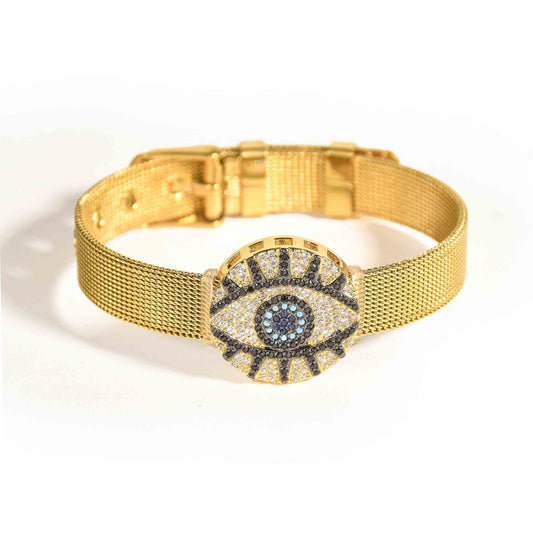
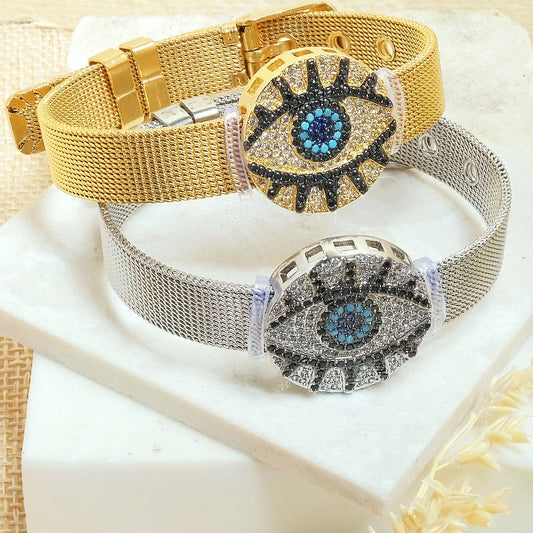
- Bangles: anti-tarnish bangles to wear alone or stacked. The Classic Evil Eye Bangle (₹ 1,000) is openable and comes in gold, rose gold and silver tones, and the Studded Buckle Link Bangle (₹ 1,399) adds a little sparkle.
- Bracelets: anti-tarnish bracelets, from fine chains to evil eye charms.
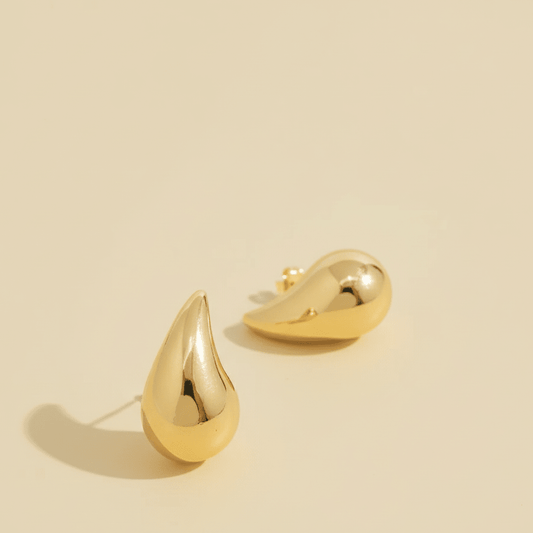
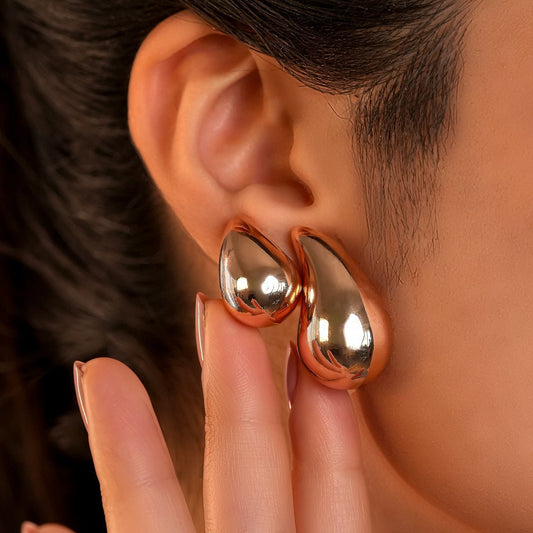
- Earrings: anti-tarnish earrings for every day, such as the Tear Drop Stud Earrings (₹ 999).
- Rings: anti-tarnish rings, including adjustable styles such as the Plain Initial Ring (₹ 749).
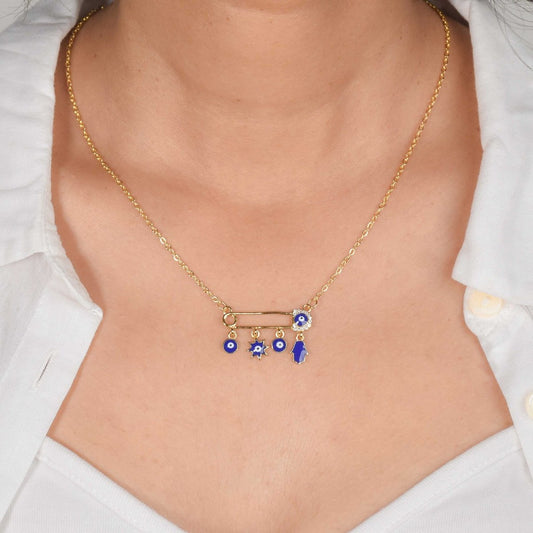
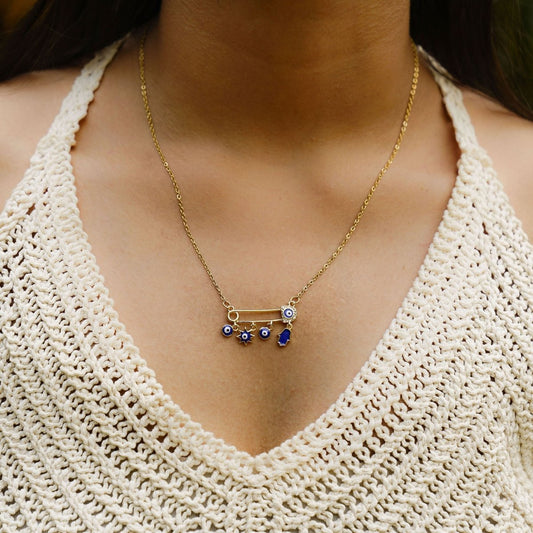
- Necklaces: anti-tarnish necklaces for layering, such as the Safety Pin Charm Necklace (₹ 1,249).
- Mangalsutra: modern mangalsutra necklaces designed for daily wear.
Not sure which piece suits you? Write to us at hello@upakarna.com or on WhatsApp at +91 93723 36579.